Pattern #1
They price the deliverable instead of the judgment.
Charging for a monthly report, a content calendar, a list of title options. So the client evaluates the report. And a report is easy to cut.
Not just the YouTube part — you should already be good at that. The business part. Pricing, boundaries, client relationships, and the reason 10+ creators have kept me on retainer for 12+ months.
I’ve watched a lot of strategists over the last few years. Talented people. Good instincts, real taste, genuinely useful to the creators they work with.
Almost none of them have a business. They have a job with extra steps and no security.
Here’s what I see over and over:
Pattern #1
Charging for a monthly report, a content calendar, a list of title options. So the client evaluates the report. And a report is easy to cut.
Pattern #2
Answering DMs at 11pm, joining calls they weren’t needed on, absorbing scope quietly because saying no feels risky. Four clients and they’re drowning. Ten seems physically impossible.
Pattern #3
When the channel pops, they’re a genius. When it plateaus for two months — and it always plateaus for two months — they have nothing to point at, and that’s when the churn text or email arrives.
Pattern #4
So every client shapes the role differently, and the strategist ends up as a part-time editor, part-time manager, part-time therapist, at strategist prices, until the maths stops working.
Pattern #5
Short-term-gains thinking. Constant pitching, constant onboarding, never compounding. A referral engine never starts because nobody stays long enough to refer.
None of that is a YouTube problem. Every one of those people knew YouTube fine.
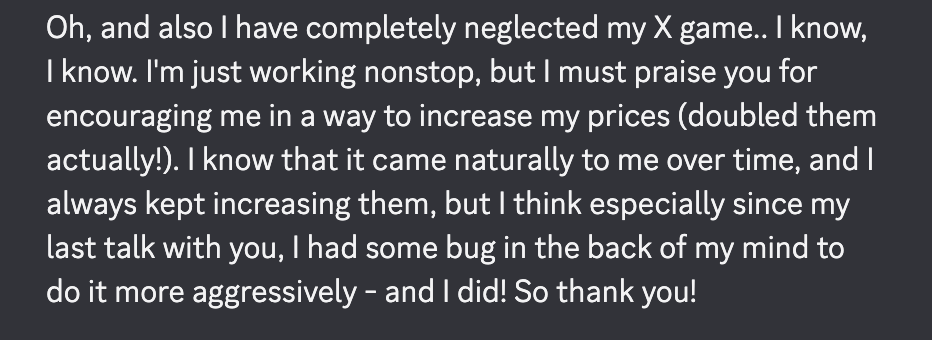
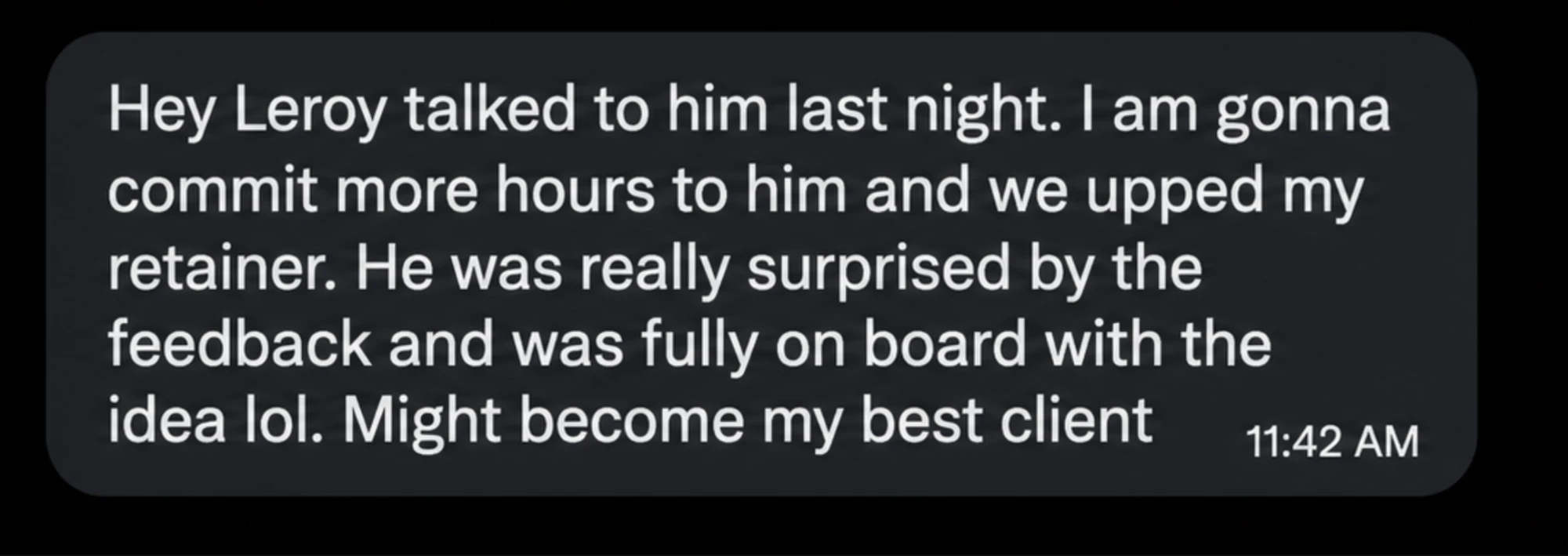
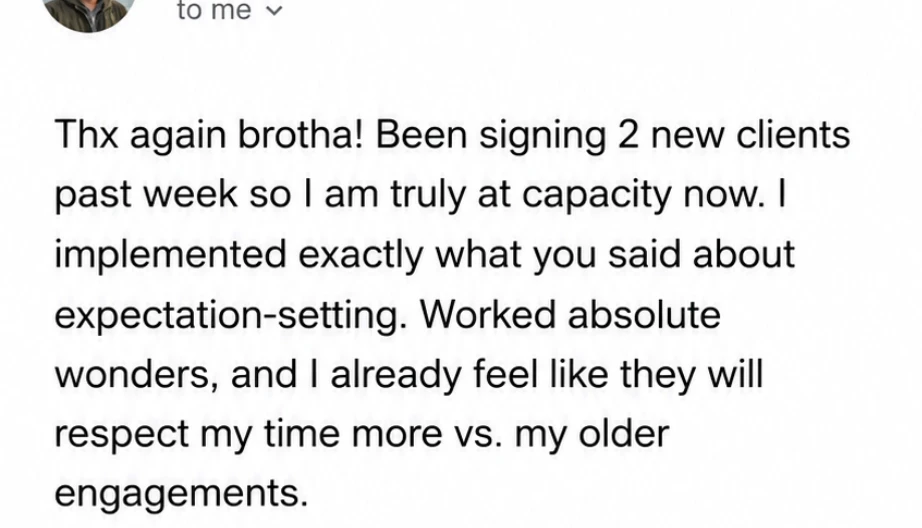
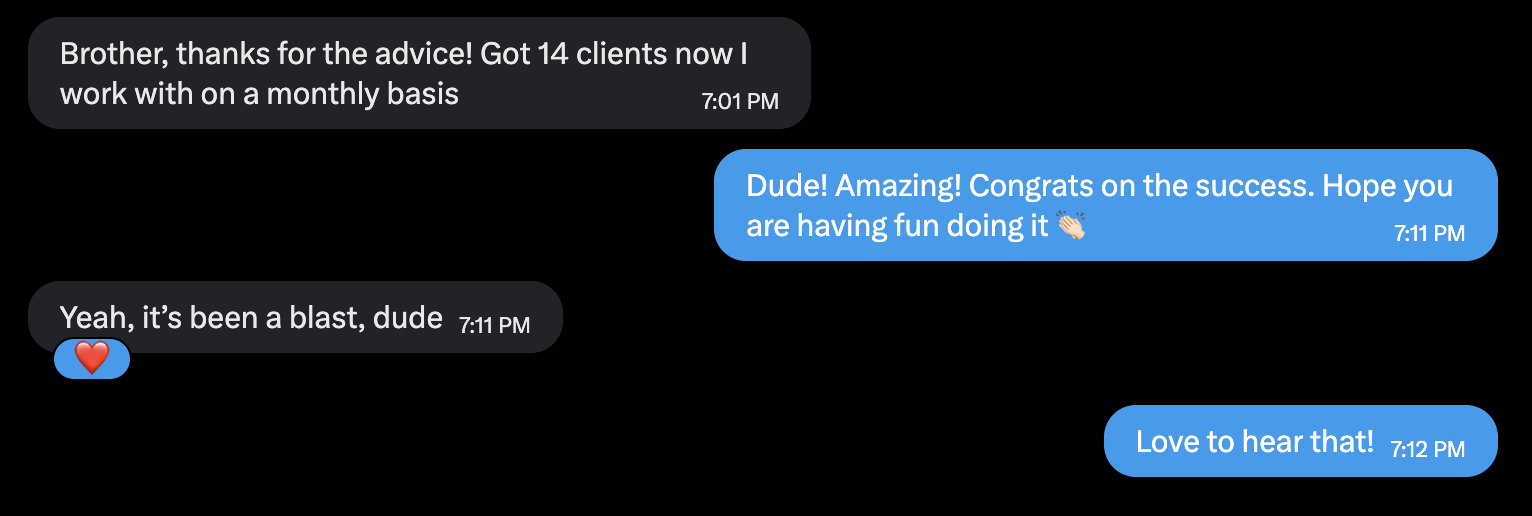

“I must praise you for encouraging me in a way to increase my prices (doubled them actually!)”
You already work with creators. You want to become the person they can’t replace.
You know the tactics, but accounts churn on your watch and you can’t work out what the senior people are doing differently.
They trust you completely, but nobody asks for your opinion on strategy, and you can’t figure out how to charge for judgment instead of deliverables.
You’ve hit a wall you can’t see the shape of. Ten seems impossible from here.
Complete beginners. Four weeks isn’t enough time to learn YouTube fundamentals and how to run a practice — and this cohort is spending all four weeks on the second one. If you’ve never worked with a creator, this is the wrong starting point and I’d rather tell you now.
Pricing, capacity, service scope, and the part most strategists never define: what you say no to.
What a 50K creator needs from you is not what a 500K creator needs. How the relationship changes as they grow, and how you change with it.
The IDEAL framework applied to a real channel, with me over your shoulder.
How to explain your value in a call, in a plateau month, in a renewal conversation. Most of this work is invisible unless you can articulate it.
YouTube fundamentals come as a self-paced course the moment you enrol, so the live sessions stay on the things you can’t teach yourself.
Week 1
You run the IDEAL framework on a real channel, ideally one you already work on, and bring it to the group with me over your shoulder. Everything in the next three weeks is about what you do with a diagnosis once you have one.
The workA full written diagnosis of one channel.
Week 2
What a 50K creator needs from you and what a 500K creator needs are two different jobs. We map how the relationship changes as they grow — including the plateau months, when your value is hardest to see and most likely to be questioned.
The workA stage map for one client: where they are now, and what changes next.
Week 3
You leave with numbers: what you charge, what’s included, and how many clients you can actually hold. Then the part most strategists never write down — what you don’t do, so that every client stops reshaping the role.
The workYour own pricing and scope document, on paper.
Week 4
How to say what you’re worth in a sales call, in a renewal, and in a month where the numbers didn’t move. Then the compounding part: why deepening the clients you have beats chasing the next one.
The workRewrite how you describe what you do — then use it.
Sessions are live, time set once the cohort is confirmed. Recordings if you miss one, but this isn’t a course you watch — there’s work between every session, and the value is in the feedback on it.

I’ve been a YouTube strategist for years, and I’m one of the only ones credited by name on an award my client won.
Nobody taught me this business. I worked it out through trial and error, badly at first, and built it up to over $30,000 a month as a solo freelancer. Most clients stay with me for years. Some became friends. A couple became business partners.
But that’s not the part I’m proudest of.
I built this while being a husband and a father. I’ve never sacrificed my family for it, not once, and I don’t think anyone should have to. The reason I can run 10+ retainer clients on my own isn’t that I work more hours than you. It’s that I set expectations properly, I’m clear about what I don’t do, and I’ve stopped confusing being busy with being valuable.
I moved from the Netherlands to the US in 2025 to be in my clients’ timezone. Over the past few years I built my own framework, IDEAL, for diagnosing and growing channels — and it’s the thing people know me for.
It’s still not why clients stay. They stay because of how I work with them. That’s the half nobody teaches, and it’s what these four weeks are.
Scroll sideways for all five.
Ten people in this first run. Not eleven.
I want this small enough to feel intimate, and I’ll personally review every application. What I’m looking for is people who are willing to do the work and who aren’t expecting miracles. I’m not a magician. I’m teaching you everything I know so you can go build your own business with it.
I review every application myself, in the order they arrive.
And the founding rate is the lowest this will ever be. If I run it again, the price likely doubles. My time is limited and so is yours.
Yes — but not necessarily as a strategist. If you’re an editor or a thumbnail designer already working with a channel, you’re probably a fit. If you’ve never worked with a creator in any capacity, this isn’t for you. I’m looking for intermediate people, not beginners.
Not really. Our first week will be spent on my IDEAL Framework and how I help clients grow faster on average. Besides that you will get a self-paced YouTube fundamentals course done by me for free. But most of this cohort is focused on running the business side of being a YouTube strategist.
You’ll be able to watch the recordings, but the cohort is small and my feedback is a big part of it. If you can’t make most of them live, don’t bother applying.
I’ll set the time once I know who’s in. With only ten people I’d rather find a slot that works for the group than pick one now and lose good applicants to it. Expect something in the morning US Central / afternoon UK. Tell me your timezone on the application and I’ll factor it in.
November 1. Four weeks.
$2,500 for the full cohort. The exact terms go to people I’ve reviewed and think are a fit. If that number scares you, this isn’t the right cohort for you.